Kiki Interiors - Decor and Staging

Tuesday, April 7, 2015

Selling Your Home? 9 Tips to Increase the Value of Your Home

If you are considering selling your home in the near future - start prepping now! Don't leave it to the last minute....to get your home in tip top shape that buyers are looking for - is a lot of work! It really is best to get a head start so that there isn't as much to do closer to the time when you want to list your property.

It can be confusing to know where to spend you money, time and energy but here are the top tips to increase to value of your home

1 - Fix ALL repairs.  not sure what's wrong with your home? Perhaps hire a home inspector to inspect your home and take a look at his report.  Leaky pipes, the roof, electrical panels etc...are the types of repairs that scare of buyers.  But be sure to take acre of cosmetic repairs too like cracked tiles.

2 - Add a fresh coat of paint.  It's worth it.  The cost of pain is minimal and it makes every space look clean and bright.  Stick to neutrals and a white trim

 Love the colored batten walls that go nearly to the ceiling. The cohesive look between the rooms is delicious too!

3 - Replace carpet.  If you have old wall to wall carpet remove it.  Carpet is a big turn off for a lot of buyers as it get dusty and an old carpet doesn't usually show well.  Opt for hardwood or laminate (perfect for a family home).  this improvement is what most buyers are looking for and it improves the quality of the air and it's low maintenance

4 - Low maintenance landscaping.  Add some plants and perhaps some shrubs/trees.  It improves the curb appeal and again, it is something that the buyer won't have to do.  If you want top dollar for your home, you need to do the work! Plus pull out that patio furniture (make sure to clean it) and set the scene -

 Dress Up Your Walkway

5 - Enhance those kitchens and bathrooms.  You don't need a total overhaul necessarily but pay attention to updating the bathroom.  Make sure it's clean, has white fixtures like tuns, toilets and sinks and chrome or brushed nickel accents.  A simple and neutral bathroom always presents better than a dated one.  for the kitchen, small updates like a new back splash in a neutral tile, updated hardware and lighting - make a huge differences.  If you have older appliances that you can't afford to replace make sure they are in good working condition and clean

6 - Other upgrades.  Lighting is huge - look for simple chrome or brushed nickel finishes.  And make sure you are using maximum wattage so the home looks bright! If you can upgrade your cabinets- do it, remember light and neutral, you want mass appeal.

 possibility of incorporating the kitchen into the dining room with cabinets

7 - Don't forget the exterior - does your front door need a fresh coat of paint? How about those lights and mailbox, have they seen better days? Do you have an address plate? Does your grip set (door handle and key slot) work smoothly? - Don't let real estate agents get frustrated by trying to enter your home for showings, not a good first impression!

8 - Let there be light!  Are there dark rooms in your home? Consider hiring an electrician to add some overhead lighting in darker rooms. In older homes, we don't often see overhead lighting in family rooms, secondary bedrooms and living rooms - so stand out from the crowd.

9 - Stage your home.  even if you are still living in the space with your furniture and accessories, hire a stager for a consultation.  They can help you will ideas to be present your home, and they can give you some great tips to appeal to buyers. A home staging team can help you in the beginning too - buy selecting the right paint colours, lighting, hardware and other updates to improve the look and value of your home.  they are a great resource for knowing what's trending in the eyes of the buyer.

 AMAZING before and after pictures of well-staged homes.  Don't brush it off when your REALTOR suggests staging!

You want your home to look it's best especially when it is up for sale.  Start the process of prepping your home for the real sale market in advance to save your self some time, energy and stick to a budget.


Labels: , , , , , , , , , , ,

Sunday, November 9, 2014

11 Expensive Design Mistakes You Don't Want To Make

We’ve all made mistakes when it comes to purchases. The sweater that was too itchy. The expensive wine that no one cared for, the list goes on.... Unfortunately, when it comes to your home, the stakes (and price tags) can be significantly higher. Of course, smaller purchases can be returned, but often the most impactful design choices require installation (and associated labour costs) that will have to be undone and redone if there’s been an error in judgment along the way. The point is not to frighten you away from changing anything, ever, or to steer you toward only neutrals, but rather a reminder that you can save a small bundle if you avoid these big blunders.

1-- TV or artwork installed too close above a gas fireplace
“This one is so common: Installing a TV or coveted piece of artwork over a gas fireplace,” says Crispin Butterfield, senior designer at Urban Theory Interior Design in Brandon, Manitoba. “From an aesthetic point of view, a 24-inch minimum distance, for example, between fireplace and the bottom of your object might not look proportionate, but trust me when I say following building codes and manufacturer installation instructions is crucial: the heat a gas fireplace gives off can and will melt your electronics and finishes if mounted too close to the output source,” she says.


2 -- Shutters in the wrong windows
Plantation shutters, also called California shutters, look so tidy, and they block the sun like nobody’s business. They also usually come with a hefty bill for a custom treatment, even at a big box store. Shutters, however, can be a mistake, not aesthetically but practically speaking. If you don’t have privacy concerns and you love the sunshine streaming in, you might be better off with a simple treatment of sheers and elegant drapes, Roman blinds or even thick-slatted horizontal blinds that pull all the way up. Roman blinds, instead of shutters are a great choice when you don’t need privacy.


3 --  Picking the wrong paint colour
“It’s only paint” is a term Brett Walther, Home & Garden director at Canadian Living loathes. “It’s often used by a patronizing expert who is describing painting your walls as a ‘low-commitment’ approach to colour,” he writes in his blog. “As if patching holes, sanding, laying dropcloth, priming, painting and then painting again is the equivalent of casually throwing a new toss cushion on a sofa.” Painting, when done by pros, can run into the thousands of dollars, so be sure to pick the colour by testing it, by painting samples on the walls first instead of relying on a small paint chip. 


4 -- Wallpaper in a high humidity room
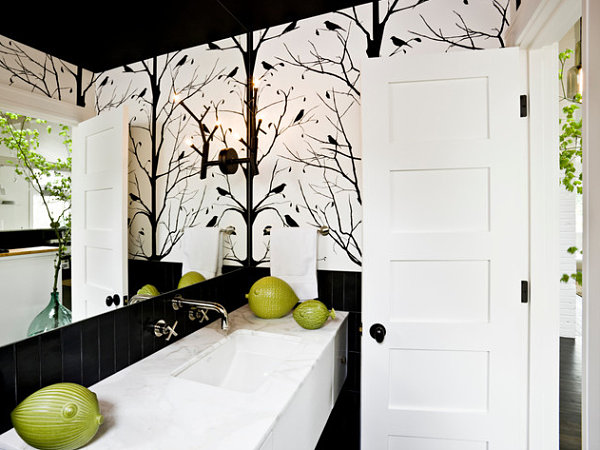
 Adding expensive wallcoverings in areas with high humidity/moisture, like an ensuite or main bathroom is a potentially expensive design mistake, Crispin says. “Ensure ventilation and airflow are adequate before sinking money into gorgeous products that could potentially bubble and peel from the walls,” she says. Humidity-friendly vinyl grasscloth and good ventilation in the bathroom pictured here, ensure the wallcoverings will not bubble.


5 -- Choosing lighting for looks alone
Stylish chandeliers, sexy sconces, pretty pendants … yes, please! Be sure that they not only look good but that they will deliver the kind and amount of light you need by either hiring a lighting consultant or at the very least, having an in-depth conversation with a knowledgeable salesperson. Otherwise, you will have to find ways to supplement your lighting, such as with lamps. You don’t want to call the electrician over a second or third time to change fixtures or add pot lights or dimmers because your new lighting makes the space too bright or dim. 

https://s-media-cache-ak0.pinimg.com/736x/1b/db/a5/1bdba545caacfeb8f2adb55ba3605baf.jpg

6 --Gutting everything in a renovation
 Not every room needs to be gutted “down to the studs,” as they say. One could argue that the character and much of the beauty of many old homes has been taken away by overeager renovations. Heed your interior designer’s advice when he or she suggests keeping or refurbishing something you already own, like flooring or cabinetry. She obviously thinks it’s worthy of staying in your home and is just trying to save you money, and possibly headaches. 


7 -- Bringing in the wrong furniture for your lifestyle
 The issue with buying the wrong furniture for how you actually live is that you won’t know it’s wrong until you’ve had it long enough not to be able to return it. We all have an idealized design style, but it has to mesh with our day-to-day lives. Cream-colour velvet anything is not great for red wine lovers. A midnight blue sofa will drive you batty if you have white cats who shed hair on it. No sense investing in a beautiful antique bedroom dresser if everything inside will be a jumbled mess-- better to stick to using your closet. Be honest about your lifestyle and cleaning habits before you buy. White cat? Consider a white or cream-colour sofa to camouflage pet hair in between vacuuming sessions.


8 -- Measuring incorrectly
Ouch!  This one can really hurt if you’re buying a big ticket item or commissioning furniture to be built by hand. Contractors and designers alike agree that mis-measurements add up to big problems. A carpenter’s proverb is to “Measure Twice. Cut Once.” For you, dear layperson who does not take measurements for a living, the rule of thumb is always to measure three times. 


9 -- Acquiring something because you "always wanted it"
 Just because you “always wanted” something doesn’t mean you should buy it or install it in your home. You may have always wanted a pony. That’s not a good reason to buy one. Avoid the pricey interior design pitfall of buying only from your heart and not your head. It’s fine to go this route if you’re replacing broken servingware with the fine silver you’ve always dreamed of. On the other hand, a finished basement with a home movie theatre might be something you always wanted, but it is an expensive mistake if what you really need is a playroom for the kids. So what we say is: If you’ve always wanted a home movie theatre but need a playroom, go with the playroom.


10 -- Relying on Photos to make a big decision
Visit a showroom where possible when renovating a kitchen or bathroom, says Crispin. “Pictures in magazines are wonderful inspiration sources, but a professional in a showroom will be able to walk you through the reality of where your budget should sit to attain the space of your dreams,” she says. “They will also sort through all of the options involved, and help determine what works best for you and your home.” For instance, kitchen tile is high-commitment and should be picked in person before committing.


11 -- Too many custom pieces in an accent colour
 “Using several accent colours in a space and having everything from pillows, to drapes, to custom upholstered chairs done up to match is an expensive and totally avoidable design mistake,” Crispin says. “The rule of thumb to follow is the 80:20 ratio. Eighty per cent of your space is dedicated to symbiotic neutrals, and 20 per cent can go towards one or two fun accent colours,” she says. 


Labels: , , , , , , ,

Sunday, February 24, 2013

Picture Perfect Kitchens and Bathrooms

So kitchens and bathrooms are always the hot spots when selling a home and even while we are living in our home those rooms are high traffic areas, so you definitely want them to look their best.  So how can this be done? Where does one find find their inspiration for these rooms?


Anything you love can be inspiration for colour … a piece of artwork, a flower, a picture. If you want to feel a certain way in a room, think of other things that make you feel that way, and then think about what they look like in your mind. A luxury hotel? A spa? A hip restaurant? The beach?

Next, look around the room. Is there a colour you can pull from your back splash tile or counter top? Are there accessories in the room that you love? 

Finally, look to the adjacent rooms. The colours in each room should flow together and work nicely side-by-side.


If you’re still stuck, flip through magazines or look at pictures online. There are lots of amazing photos of kitchens and bathrooms out there to inspire you.


Small bathroom makeover. Love the colours.
Tip: Do not choose your paint colour in the store. Because the lighting in the store is different than the lighting in your home colours will look different in each location. Bring the swatches home and hold them up vertically against the wall to get the truest sense of what the colour will look like. Better yet, buy a small sample and paint some test swatches.


Labels: , , , , , , , ,

Saturday, September 8, 2012

Flipping out!

With all of those 'home flipping' shows out there so many people are trying it out for themselves.  And it's a great and quick way to make so cash BUT you have to know what you are doing.


Just this week I met with a 'flipper' to help him with an interior and exterior colour package to make the house look amazing but on a tight budget.  The house was originally built in 1959 and was completely untouched.  He has some great ideas to make the house look incredible and really attract buyers - he's opened up the floor plan, he's adding new tile (to replace the old and dated linoleum), new light fixtures, new paint, updating the bathrooms and cleaning up the exterior which is currently covered up by 3 large and overgrown evergreens.

But already he has made some mistakes that have really eaten up his $30,000 budget.

1-  He met with a kitchen designer (which is smart) but you must as a flipper communicate your budget and what you are doing.  Yes, you want the home to look good but within a budget.  His kitchen will cost him $10,000 and that is just for the cabinets - no flooring, no counter top, no appliances, no back splash, no lighting - so now he really has to make the remaining $20,000 really stretch.

2 - His realtor has told him he can build an income property in the basement (aka a basement apartment) which is true but he needs to clear this with the city first to make sure it is a legal basement apartment. To have a legal income property there are certain permits are required along with inspections.  If you do not get these permits or inspections it can really cost you in the end. Lucky for this flipper he has not started the work on the basement and is now thinking about just finishing up the basement with some new lighting, drywall, paint and carpet for a rec room space.


If you are interested in house flipping, here are some really important tips to follow:

1.  Do not get emotional.  This is a business transaction.  Yes you need and must care about following building codes but when it comes to the renovation do not get carried away with the upgrades and expensive pretty things.  also do not get too emotional when it comes time to sell, by holding out for the right price you are losing money every month by paying a mortgage.  Listen to the market.

2.  First impressions really matter.  We are all familiar with the expression 'don't judge a book by it's cover" but when it comes to buying a house (and getting top dollar) the 'cover' matters so make the house look it's best inside and out.

3.  Don't get too personal with your flip.  Make sure to choosing interior and exterior finishings and colours that will attract a broad range of buyers.  So don't get too bold with your selections.  If you aren't certain what to choose ask an expert in a home improvement store, paint store or cabinet store - what is popular?


4.  Focus on the hot spots.  Kitchens and bathrooms sell homes - so spend the bulk of your time and energy in there.  Keep your budget in mind, what's popular/selling in the neighbourhood and the buyer expectations, for example f you are trying to sell a home in a high end neighbourhood buyers expect stone counters, hardwood flooring etc...

5.  Time is money.  Have a plan and stick to it.  Have a list of what you need/want done.  discuss this list with your contractor and/or crew and create a realistic timeline of everything that needs to be done.  Bumps in the road do occur (I've never heard of a Reno that hasn't hit a few snags) so factor in a few days grace.  Tackle the largest jobs first.

6.  Find good help, although hard to find.  Ask around.  Make sure your contractor is there everyday and communicate with him everyday - asking for updates on how the house is going along with your budget.  Check on the home everyday too - this always surprises me when investors do not actually check on the home to see the progress - this is a must!

7.  Paperwork is normal and get it done first.  The paperwork I'm talking about is permits.  You need them before the work starts and they can take  few months but do not start the work without them because you can be shut down if you do.  Keep all receipts for all of the items you purchase as well - you may need to make returns or exchanges. You will also want to track you expenses and use those numbers to help you estimate for your next flip.

8.  If you are thinking that this is not a one time thing - work your way up.  Start with a small project 'a lipstick' job meaning a job that is simply cosmetic.  Take one bigger projects once you have some experience under your belt.

9.  Expect the unexpected.  Be prepared for silly things to happen along the way.  Lost paperwork, not enough tiles were delivered, the paint colour is off, odd feedback from potential buyers...not much you can do to prepare or circumvent this from happening but expect it.

10.  If you are working with an agent (you probably did with the purchase and might for the sale, too) talk to them about what they think the home could sell for after the renovation, who they think will buy the home and what will that buyer be looking for.  The answers to those questions will really help guide you to make certain choices.  For example, the flipper I met with this week has not had those discussions with his realtor.  I suggested to him that the buyer might be a young family and an income property in the basement might not appeal to them, they would probably prefer a basement family room.


Labels: , , , , , , , , ,

<data:blog.pageTitle/>

This Page

has moved to a new address:

http://kikiinteriors.com

Sorry for the inconvenience…

Redirection provided by Blogger to WordPress Migration Service